Just as we thought we were finally enjoying a warm, sunny weekend in the first week of April, a heavy rain advisory has been issued again for this weekend. This year’s rainy season in Hawaii felt longer than usual, and temperatures seemed lower than normal.
In March of this year, in particular, a back-to-back large Kona low-pressure systems brought more than two weeks of heavy rain and frequent flood warnings across the Hawaiian Islands.
While Hawaii typically receives heavy rainfall around February and March, marking the end of the rainy season, this year’s downpours were record-breaking—the heaviest in 20 years. According to reports, Hawaii’s total rainfall in March exceeded 2 trillion gallons, which is equivalent to 3 million Olympic-sized swimming pools.
The damage from the torrential rains was particularly severe in rural areas of Maui and Oahu’s North Shore, and many farmers still have no clear path to recovery. We are at a loss for words to express our sympathies. After seeing the news reports of this damage, many friends contacted us to ask if Second Nature Farm was okay. Thank you very much for your concern. Although some vegetables and flowers were affected, we were so fortunate that the damage was minimal.
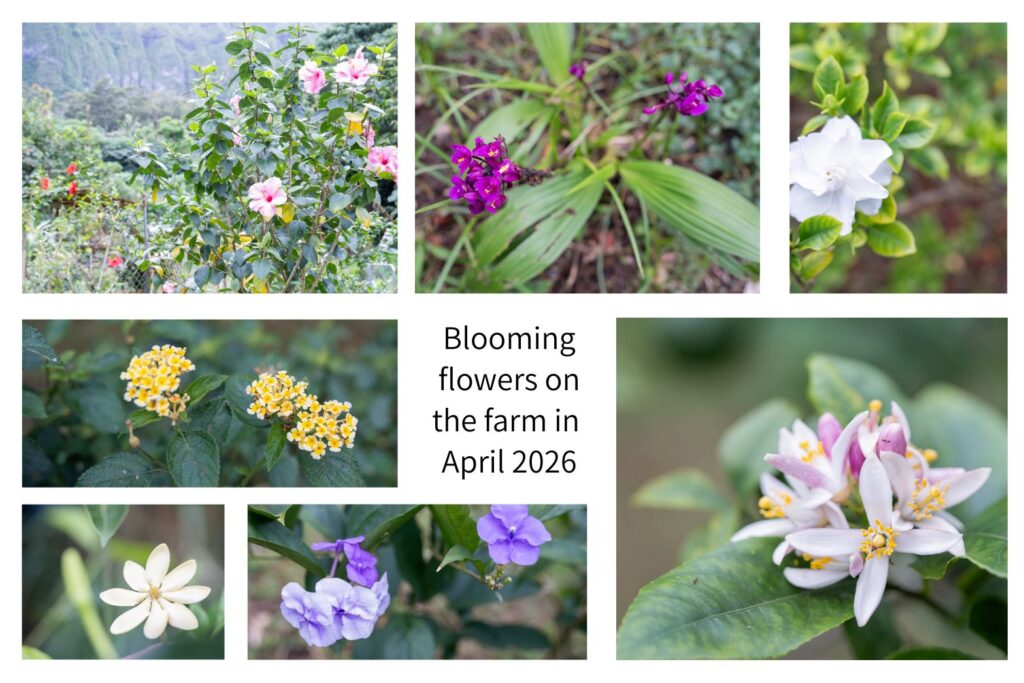
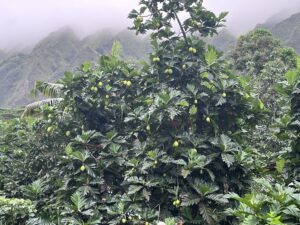
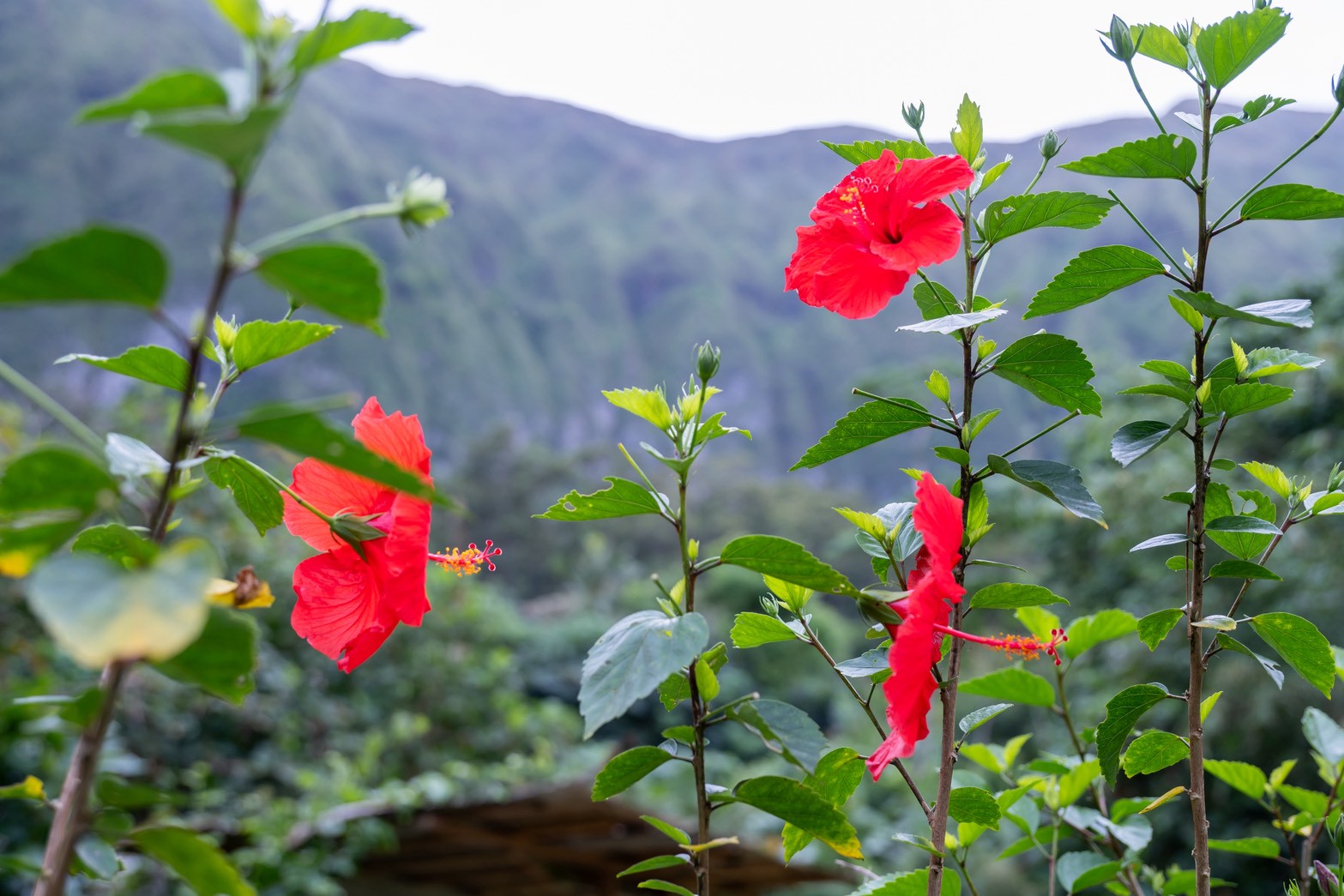
The day after the Kona low-pressure system passed, I felt so grateful on the farm. While the stream currents were stronger than usual and the soil was quite muddy, the taro fields, main plots, and chicken pens were unharmed, and spring flowers were filling the entire farm with their fragrant scent.
Looking up, I saw rainwater streaming down from the mountain peaks, creating nearly 20 white streaks resembling waterfalls on the mountainside. These “waterfalls” only appear when there is exceptionally heavy rainfall. Gazing up at that rare, ethereal scenery, I put my hands together in gratitude, thinking that the Ko’olau mountains and the forest had protected us.
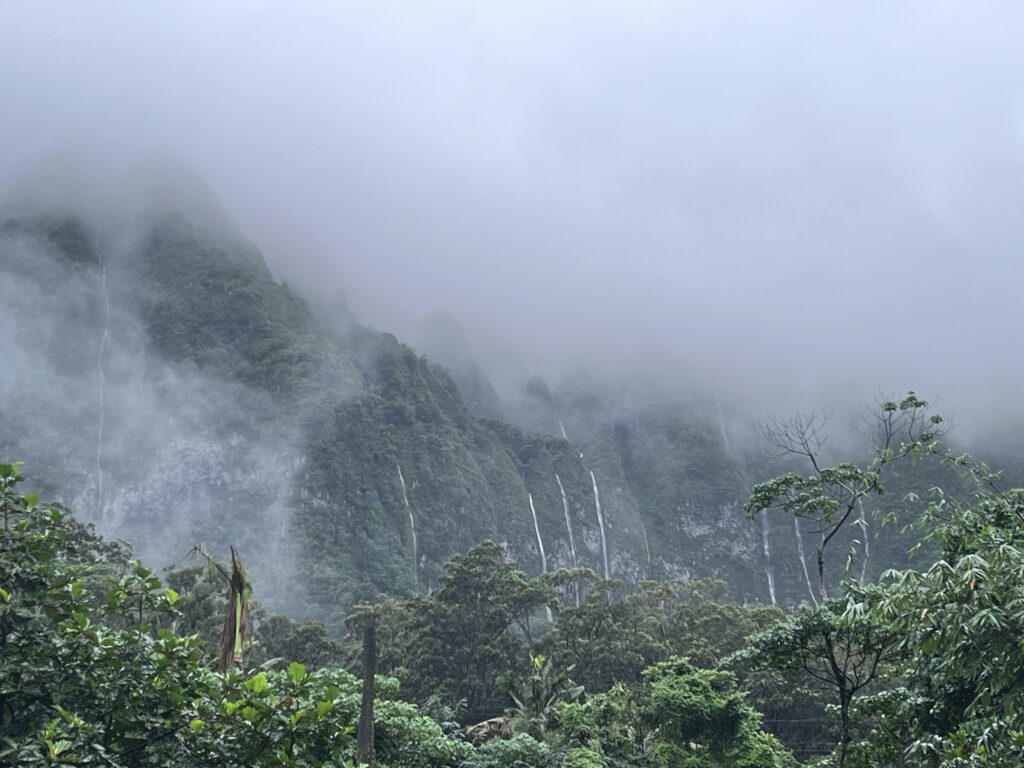
The day after the Kona low-pressure system passed, I felt so grateful on the farm. While the stream currents were stronger than usual and the soil was quite muddy, the taro fields, main plots, and chicken pens were unharmed, and spring flowers were filling the entire farm with their fragrant scent.
Looking up, I saw rainwater streaming down from the mountain peaks, creating nearly 20 white streaks resembling waterfalls on the mountainside. These “waterfalls” only appear when there is exceptionally heavy rainfall. Gazing up at that super-rare, ethereal scenery, I put my hands together in gratitude, thinking that the Ko’olau mountains and the forest had protected us.
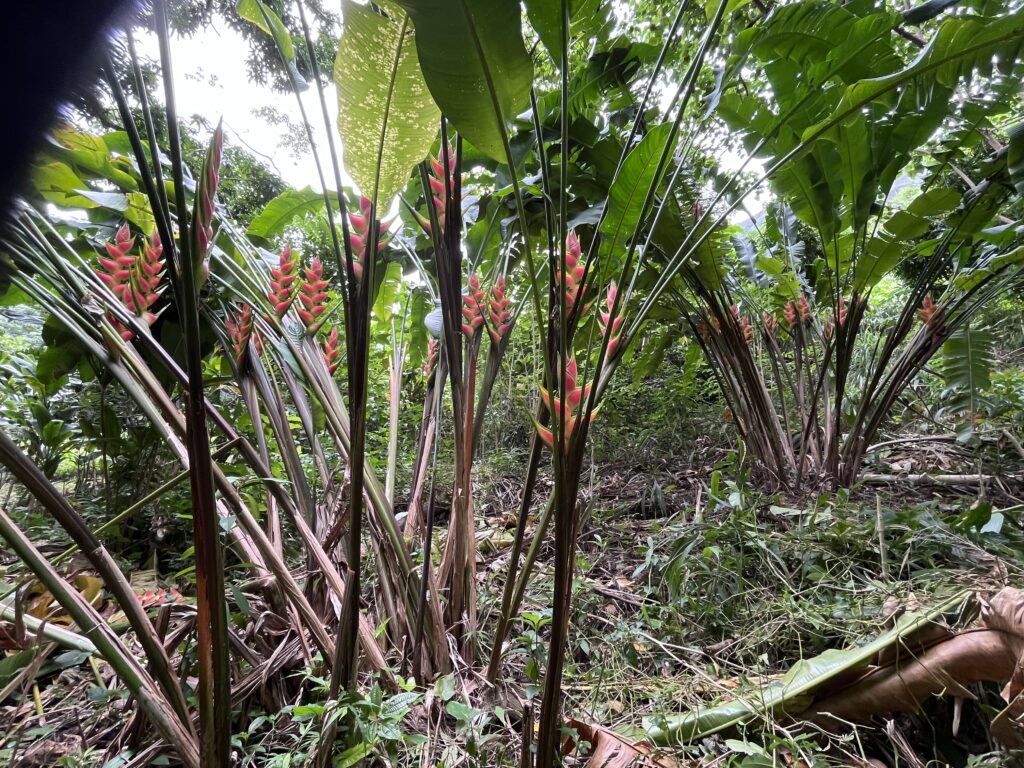
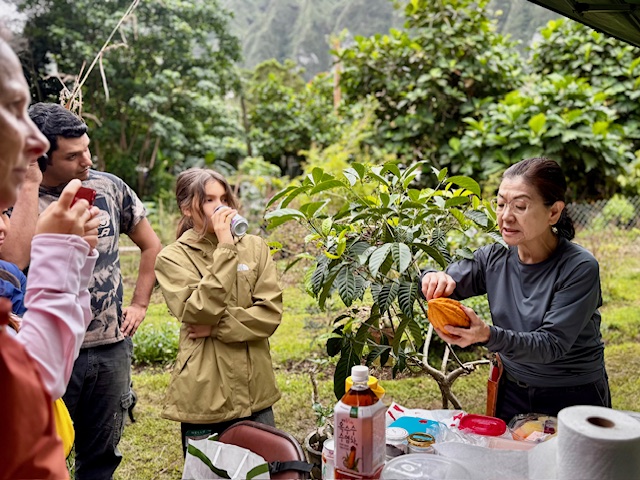
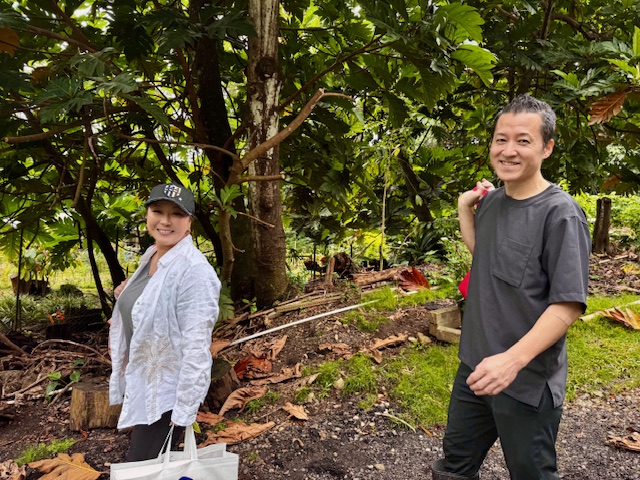
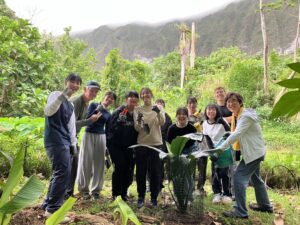
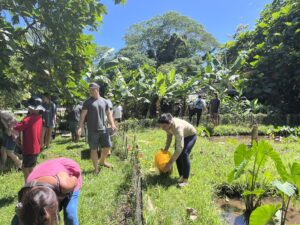
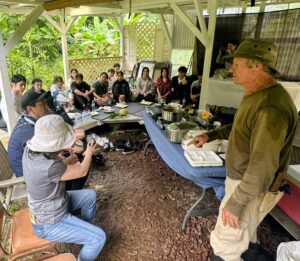
Since there were many new participants, we also shared how this agroforestry natural farm draws inspiration from traditional farming methods passed down through the ages.
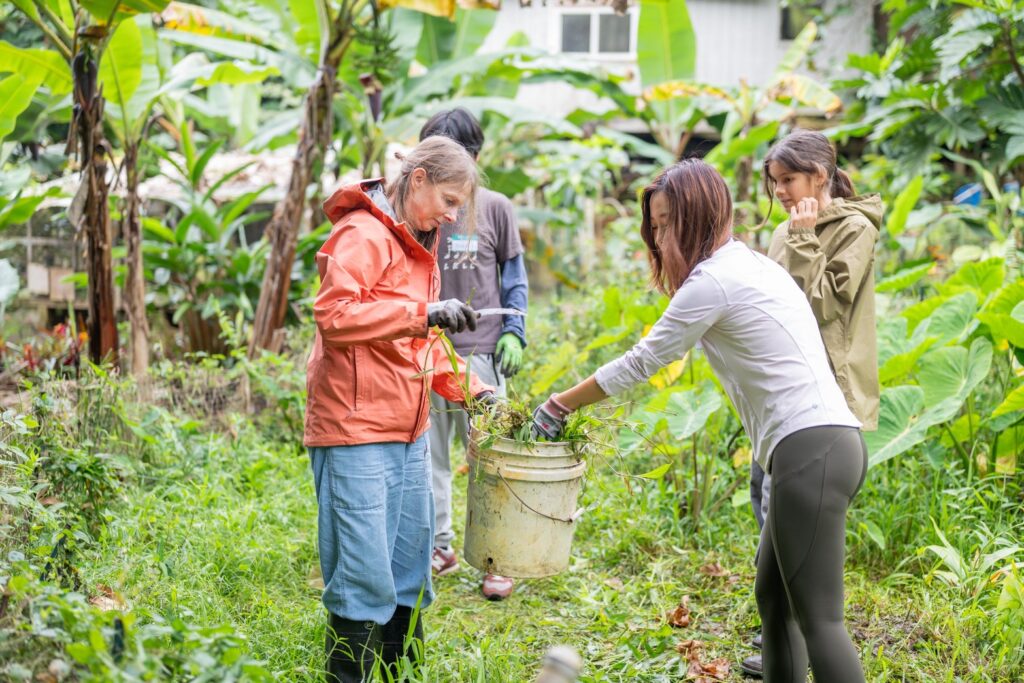
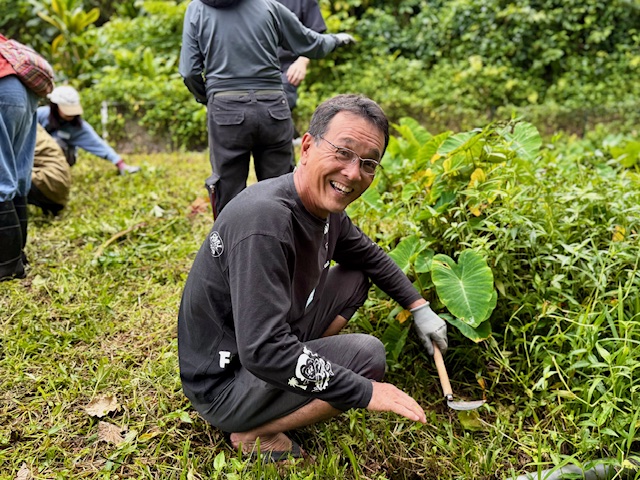
First experience in weeding at taro field
In ancient Hawaii, the island was divided into several regions stretching from the mountains at the center—much like slicing a pizza or a round cake—down to the sea, and each of these sections was named a “Moku” and governed accordingly. In each Moku, rain falling on the mountains was filtered through rocks and deep soil layers, nourishing the forests and farmland. This nutrient-rich water, having passed through healthy soil, flowed into rivers and then to the sea via natural waterways, preserving the ecosystem’s cycle and supporting the livelihoods of people living in the mountains, rural villages, and fishing villages.
This ecosystem connecting the mountains and the sea was called Ahupu’a in Hawaiian. With modernization, however, Western-style development, lifestyles, and food culture became widespread, clogging or severing the connections between the mountains, the sea, and people’s lives. On the other hand, in long-established farming areas of each island, a movement to revive Ahupu’a has gained momentum among younger generations in recent years.
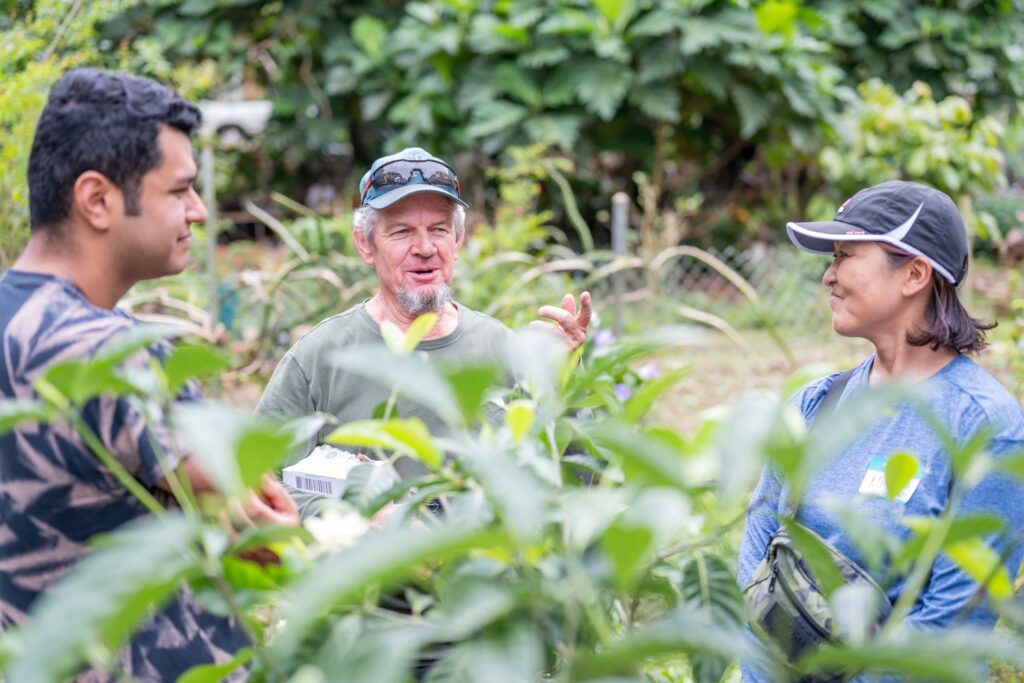
At the same time, we can find that the movement to rebuild a way of life in harmony with nature that connects the mountains and the sea is not unique to Hawaii. Since ancient times, in any land surrounded by mountains and the sea, the protection of ecosystems has been intrinsically linked to the bounty of the mountains and the sea, as well as to people’s health and well-being. In an effort to restore the natural environment severed by modern civilization and development, which privatized the economy, steady movements to revive this cycle are gradually increasing worldwide.
For example, in Japan’s Tohoku region, the late oyster farmer Shigeatsu Hatakeyama, in the late 80s, advocated that “the mountains are the sea’s lovers” and promoted a reforestation campaign. And now, younger generations are increasingly adopting natural farming there.
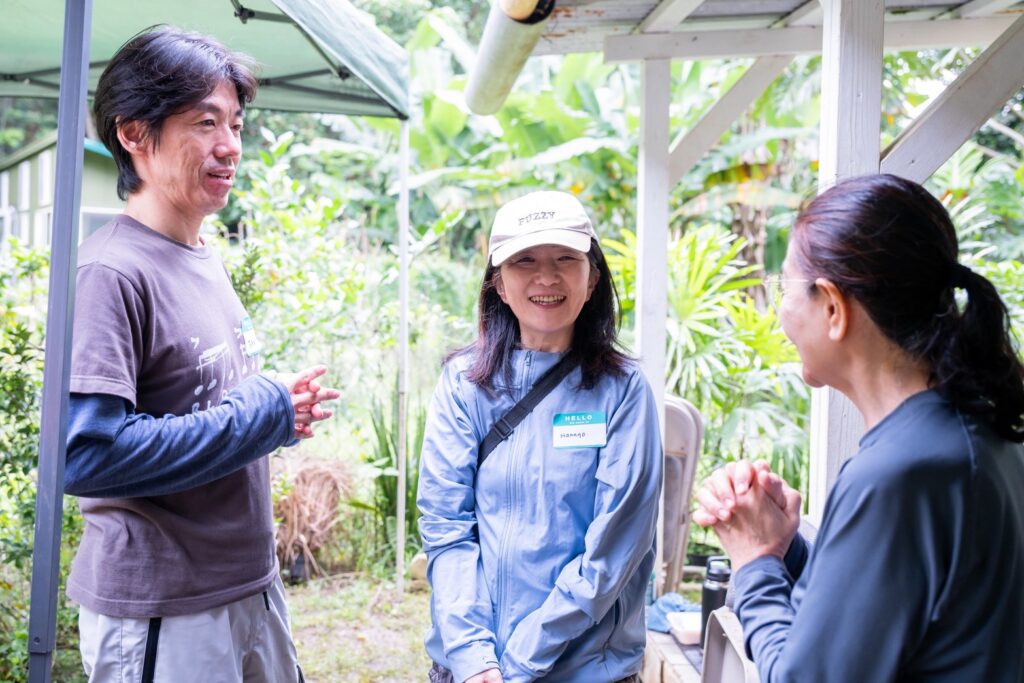
To minimize the damage caused by heavy rain and floods like the ones we’ve experienced recently, Gary and Takae want to use our small agroforestry project to convey a way of life in which humans are sustained by nature rather than trying to dominate it. As we shared these thoughts with our new members—wishing to keep the flame of hope for the future alive—we reaffirmed our determination to pass this farm, no matter how small it is, on to the next generation.
(Photos courtesy of Seiju Nakai and Chihiro Kitagawa)